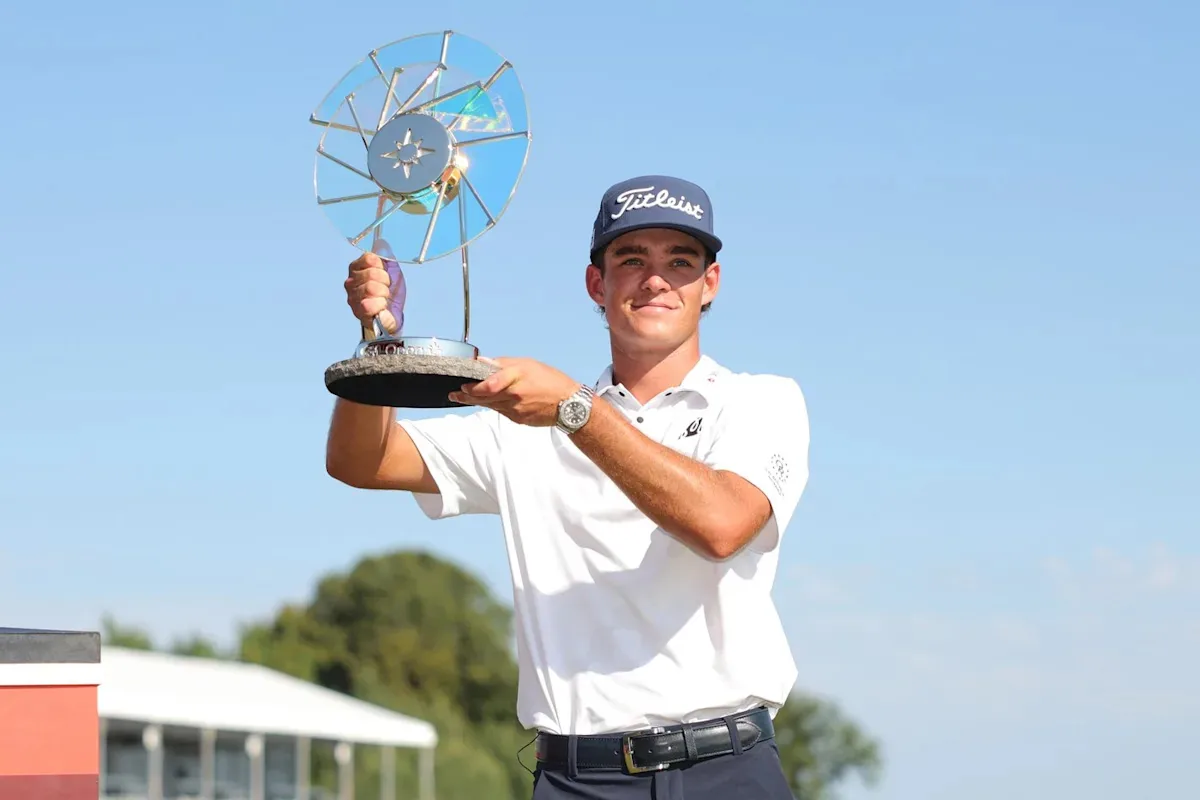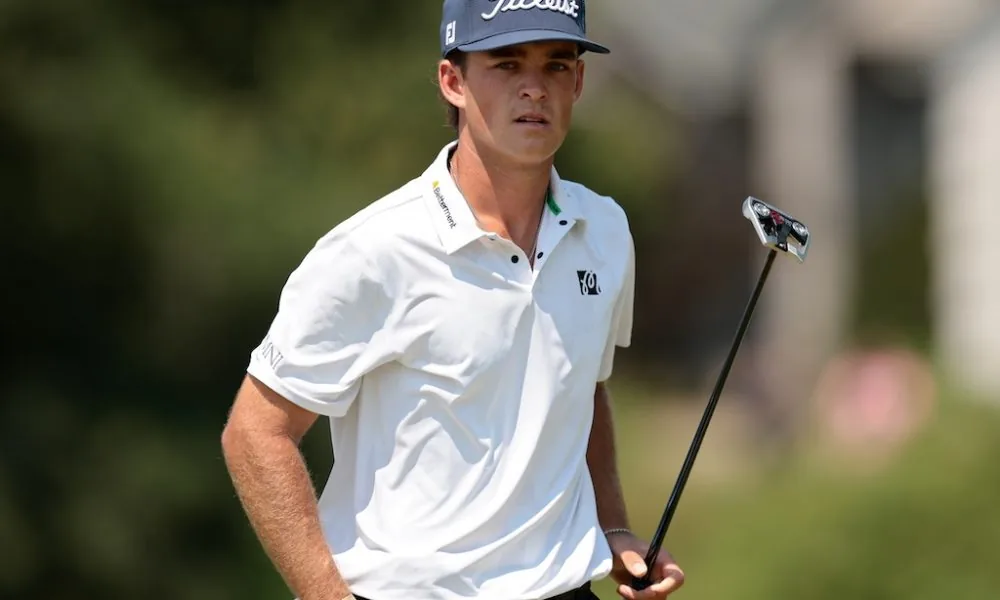

The British Open at Royal Birkdale commenced with unexpected performances, as Jackson Suber, playing in his first Open Championship and first trip to Europe, secured the lead with a five-under 65. Suber’s round was marked by a crucial par save and a six-foot eagle putt late in his play, demonstrating a rapid adaptation to links golf.
Suber, a 26-year-old American who has yet to claim a professional victory since his time at Ole Miss, is participating in only his third major tournament. His impressive round included a challenging par save on the new par-three 15th hole, known for its severe slopes. He then followed this with a six-foot birdie on the 16th and an eagle, achieved by hitting a four-iron from 233 yards to within six feet of the hole.
His performance is particularly notable as it was only his seventh round in any major and his first on a links course as demanding as Birkdale. Suber commented on his strategy, stating he “just kind of kept the ball in good spots and didn’t put much pressure on my game to make pars.”
Suber’s 65 placed him one shot ahead of Sungjae Im and Dan Brown of England. The group of nine players tied at 67 included four other debutants in the Open: Alex Smalley, Ryan Gerard, M.J. Daffue, and Pierceson Coody.
DeChambeau’s Strategic Play
Bryson DeChambeau, who has previously missed the cut in all three majors this year, also delivered a strong performance, finishing with a 67, placing him two shots behind the leader. DeChambeau’s approach to the links course has been a topic of discussion, particularly after three-time British Open champion Nick Faldo criticized his strategy on a golf podcast.
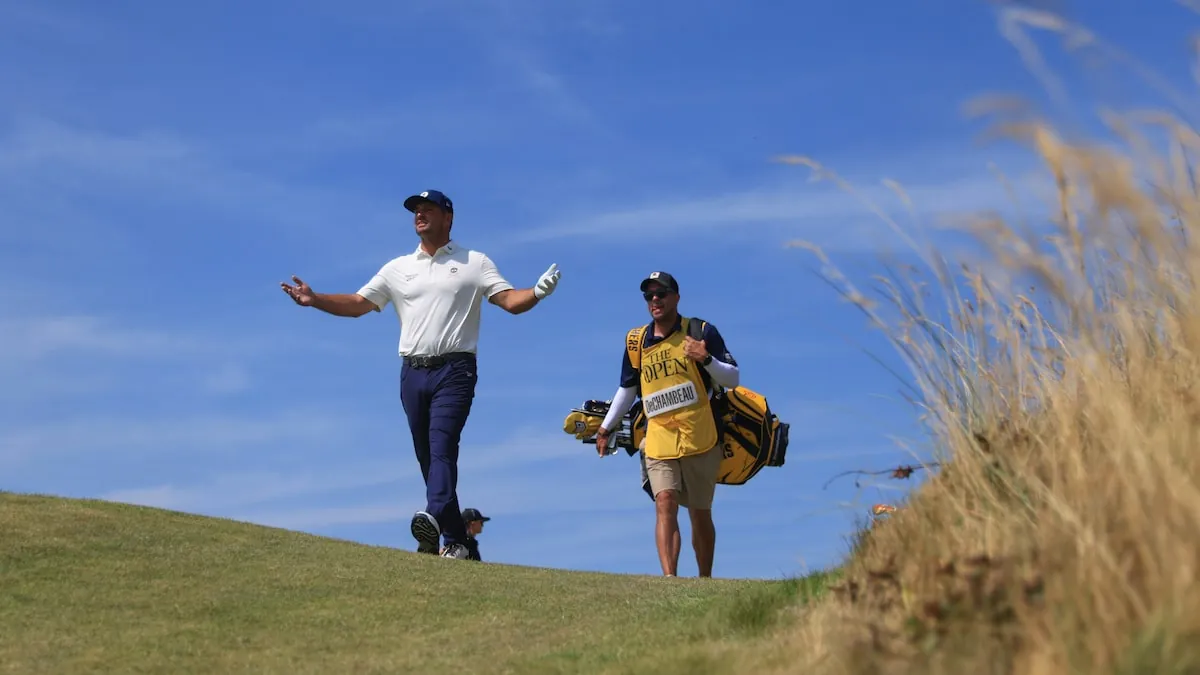
Faldo had suggested that DeChambeau lacked a clear strategy for links golf, advocating for a more controlled, ‘threading’ approach rather than ‘blasting’ the ball. Despite this, DeChambeau often used his driver to bypass challenging bunkers, a tactic that proved effective. He hit only four fairways but managed to miss only three greens, avoiding significant trouble even when not on the short grass.
DeChambeau executed powerful tee shots over hazards and close to the green on the par-four second and par-four 10th holes, making birdies on both. While some, including Jon Rahm, noted that aggressive long shots can lead to difficulties, DeChambeau’s only dropped shots came from his putting on the par-five 14th and chipping on the par-four 18th.
He was briefly tied for the early lead before an errant shot on the 18th led to a weak chip and a missed putt. DeChambeau also missed three birdie opportunities from within 10 feet, including one on the redesigned 321-yard fifth hole where he drove just past the green.
Scheffler’s Mixed Round and McIlroy’s Struggles
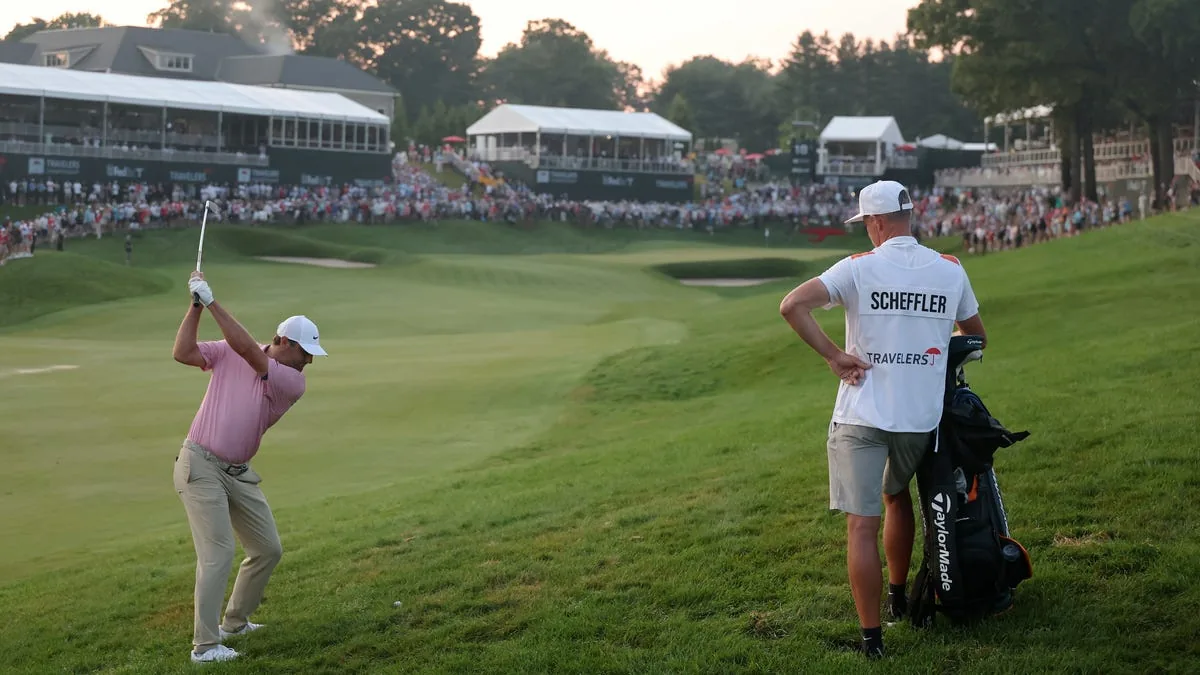
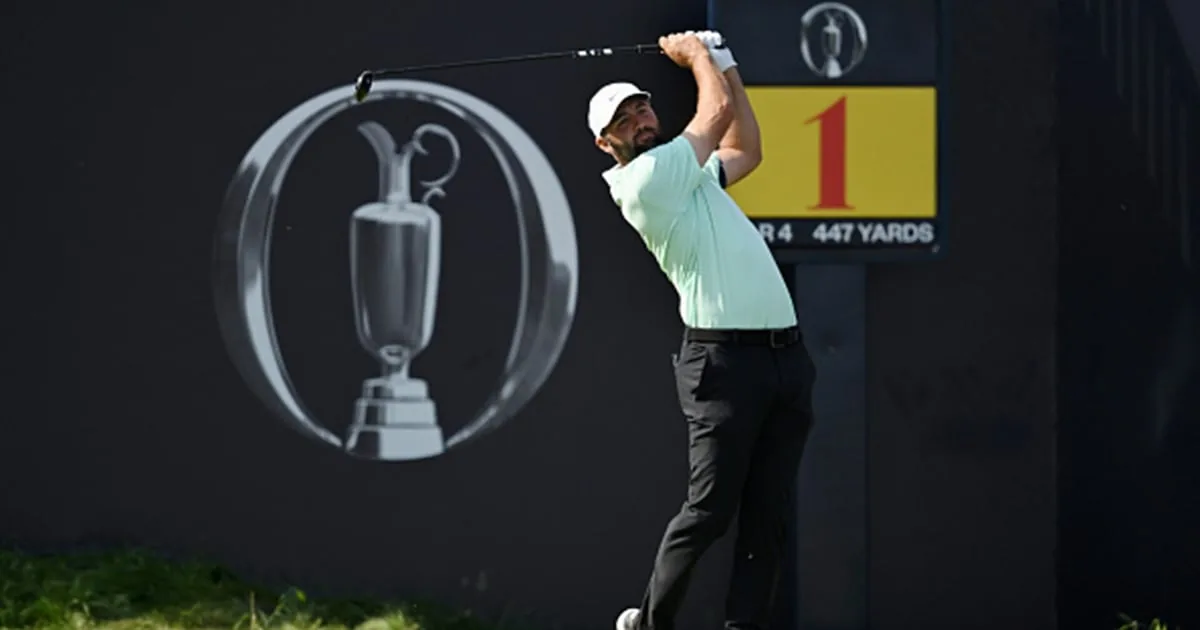
World No. 1 Scottie Scheffler finished his round with a 68. He started strong with four birdies in his first six holes, demonstrating control over his shots. A 40-foot birdie putt on the sixth hole brought him to four under par.
However, Scheffler did not record another birdie for the remainder of his round, playing the two par-fives in one over and making two soft bogeys. He also missed a five-foot birdie putt. Despite this, Scheffler expressed satisfaction with his ball-striking, stating, “If I continue to strike the ball the way I did today and just keep giving myself looks, that’s part of it. Golf is played over 72 holes, and I definitely liked what I saw today.”
Scheffler encountered trouble on the seventh hole, missing the green to the left. His subsequent pitch shot nearly went into a bunker on the opposite side. He also made a mess of the par-five 17th when his ball was deeply buried in the grass. He reflected on the challenges of an offline shot, noting that sometimes it results in a clean lie, but other times, like today, “you pay a pretty severe price.”
In contrast, Rory McIlroy faced a challenging opening round, recording a 72. His round included six bogeys and he missed three four-foot putts within a four-hole stretch, highlighting a difficult start to the tournament.
Read Also
Source: theglobeandmail.com

Chloe Tremblay is the Sports Reporter at CasinoNews, covering basketball, tennis and athletics with nine years of reporting experience. She reported on the Raptors' rise and two Olympic cycles. She holds a degree in Journalism from Concordia University. Based in Montreal, she plays recreational basketball and follows track athletics. “The best stories come from the athletes everyone overlooks.”