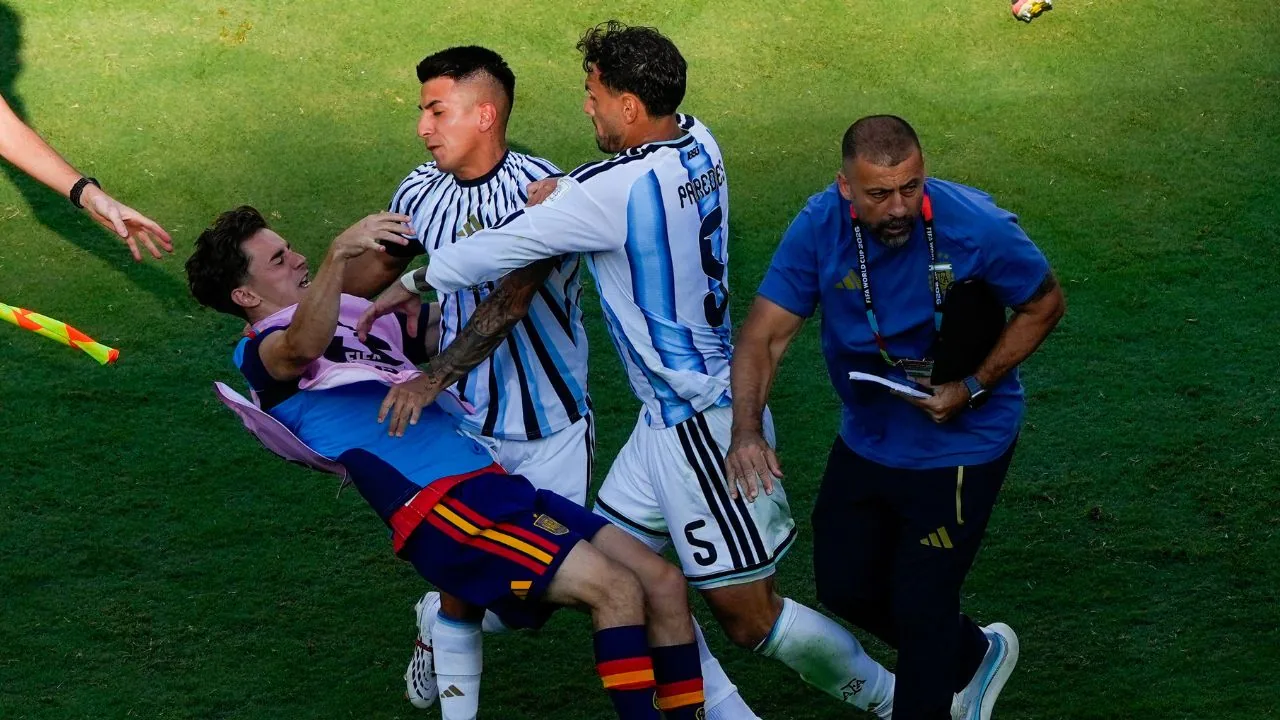

Switzerland’s Breel Embolo was sent off during his country’s World Cup 2026 quarter-final defeat by Argentina, becoming the first player to be dismissed under a new mistaken identity rule introduced for the tournament. The incident occurred in the 72nd minute of the match in Kansas City, just five minutes after Switzerland had equalized against the defending world champions.
Initially, the caution was issued to Argentina’s Leandro Paredes following what appeared to be a challenge. However, the video assistant referee (VAR) intervened, prompting referee Joao Pinheiro to review the play on the monitor. Upon review, the official determined that Embolo had simulated a foul, leading to a second yellow card for the Swiss forward and his subsequent red card.
Controversial Dismissal and Rule Interpretation
The dismissal of Embolo, who had received an earlier booking in the first half, sparked considerable discussion. Former Major League Soccer striker Bradley Wright-Phillips commented on the situation, stating he felt for Embolo’s teammates but not for the player himself, suggesting the incident may have cost his team a chance at the semi-finals. Former Jamaica international Jobi McAnuff echoed this sentiment, noting that Embolo let himself and his teammates down, despite acknowledging that slow-motion replays can make such actions appear worse.
The new rule, requested by Fifa’s head of referees Pierluigi Collina, allows for a decision to be changed if a player is booked or sent off but the foul was actually committed by the opposition team. In this instance, if Paredes had not initially been booked, the mistaken identity ruling would not have been triggered, and Embolo would have remained on the field.
The protocol for mistaken identity was previously used earlier in the tournament when USA defender Tim Ream was initially cautioned for a foul on Miguel Almiron. After VAR intervention, Dutch referee Danny Makkelie rescinded Ream’s caution and instead booked Almiron for simulation, demonstrating the application of this new interpretation of the rule.
Match Outcome and Semi-Finals
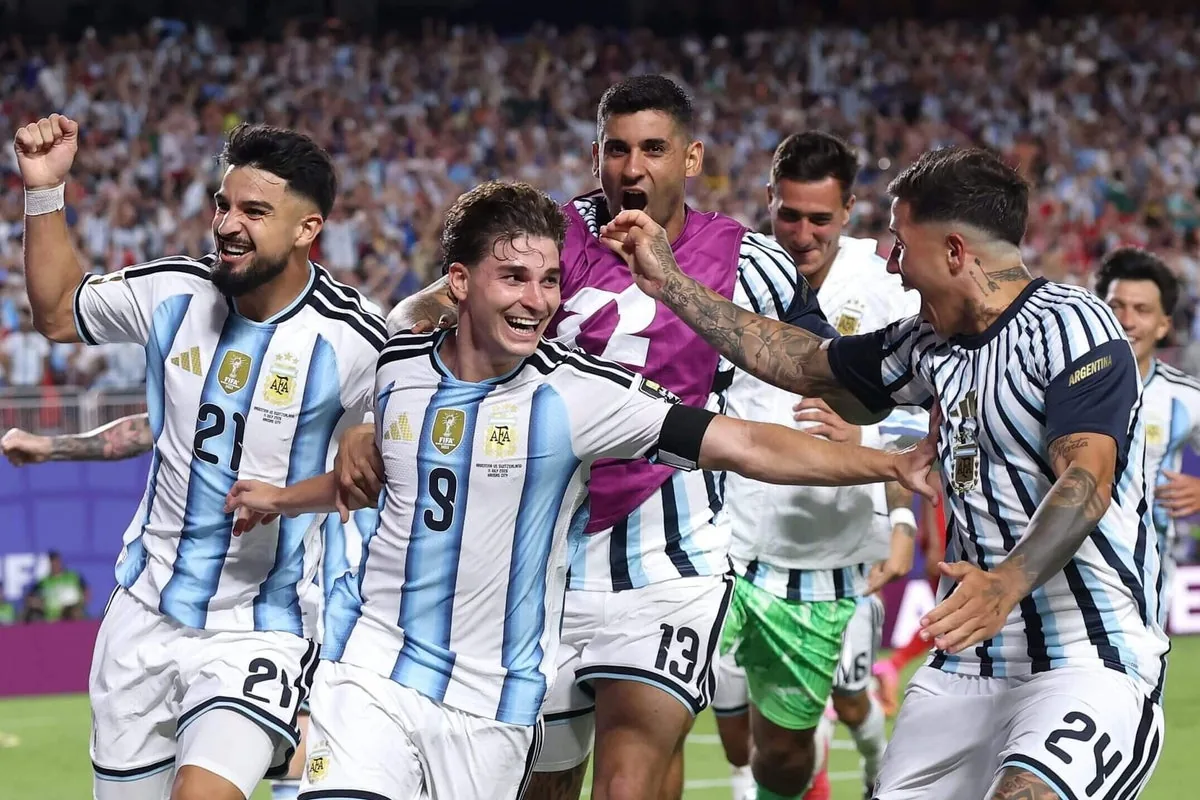
Despite the controversy, Argentina ultimately secured a 3-1 victory in extra time against the 10-man Switzerland. Goals from Julian Alvarez in the 112th minute and a late third from Lautaro Martinez sealed their progression. Argentina will now face England in the semi-finals, a match scheduled to be broadcast live.
Switzerland’s coach Murat Yakin expressed pride in his team’s effort, stating, “This team has so much passion. Despite the fact we were one man down, we gave it all. I’m extremely proud of everyone.” The match saw Lionel Messi provide his 10th World Cup assist, setting up Alexis Mac Allister’s opener, though Messi himself did not score for the first time in this World Cup.
The quarter-final was not without its challenges for Argentina, who struggled for fluency at times. Switzerland managed to create several opportunities, with goalkeeper Emiliano Martinez making multiple saves, including from Ndoye and Granit Xhaka. The Swiss equalizer, scored by Dan Ndoye, came during a period where Switzerland controlled possession and found ways to penetrate Argentina’s midfield.
The upcoming semi-final against England promises to be a compelling encounter, marking the first time Messi will face England in a World Cup match. The rivalry between the two nations is deeply rooted, and the match is anticipated to be highly competitive, with tickets for the game in Atlanta reportedly selling for significant amounts.
Argentina’s journey through the knockout stages has been described as chaotic, with the team earning wins despite sometimes underwhelming performances. This victory extends Argentina’s record of scoring in 15 consecutive World Cup games and scoring at least twice in each of their past 11, surpassing Uruguay’s record between 1930 and 1954.
Read Also
Source: bbc.com

Ethan Brule is a Senior Hockey Writer at CasinoNews. He covered the NHL for a national Canadian outlet. He focuses on the NHL, the Maple Leafs and Team Canada and is known for clear, deadline-driven reporting. He holds a degree in Sports Media from Toronto Metropolitan University. Now based in Toronto, he plays beer-league hockey and follows the junior ranks. “Hockey in Canada is never only about the score.”